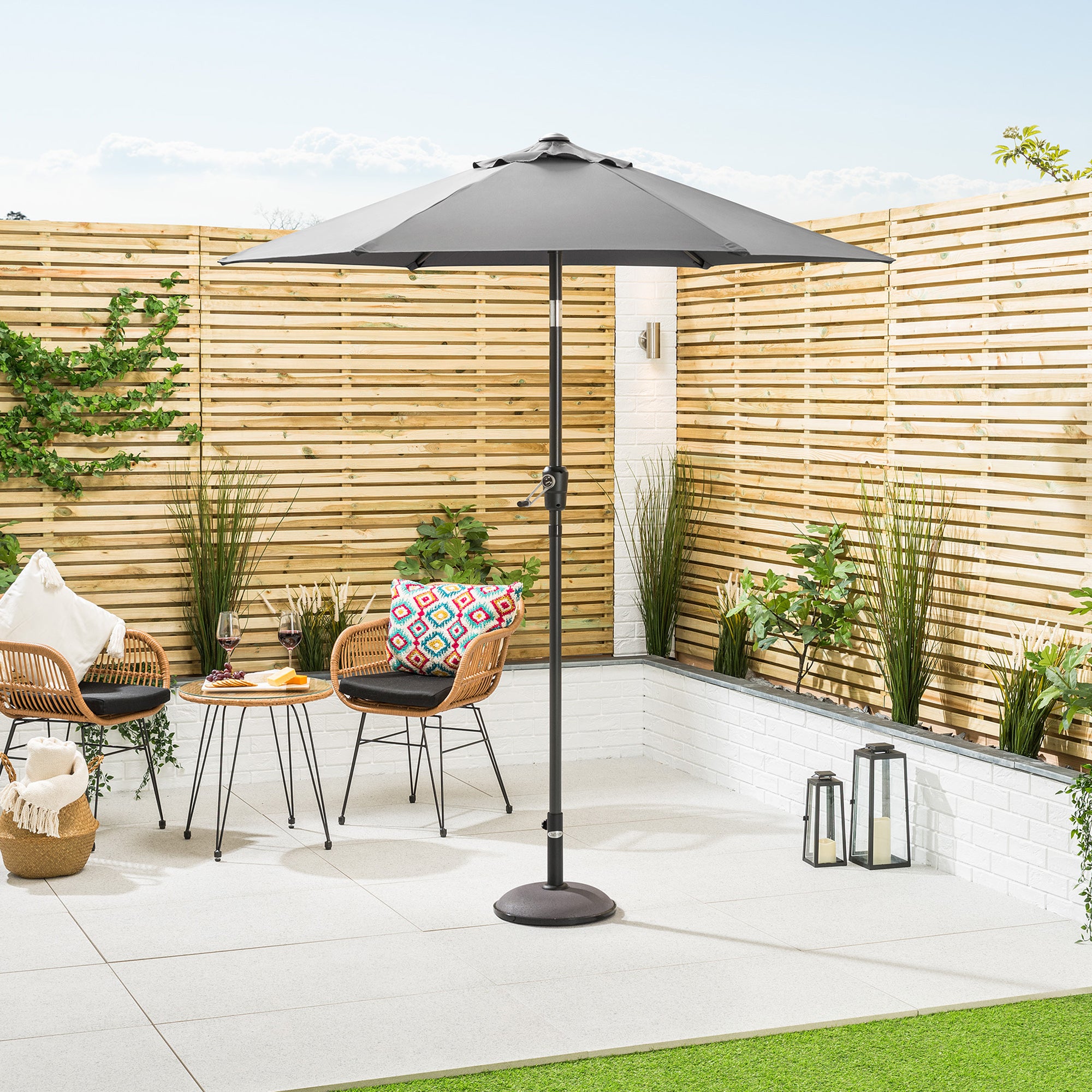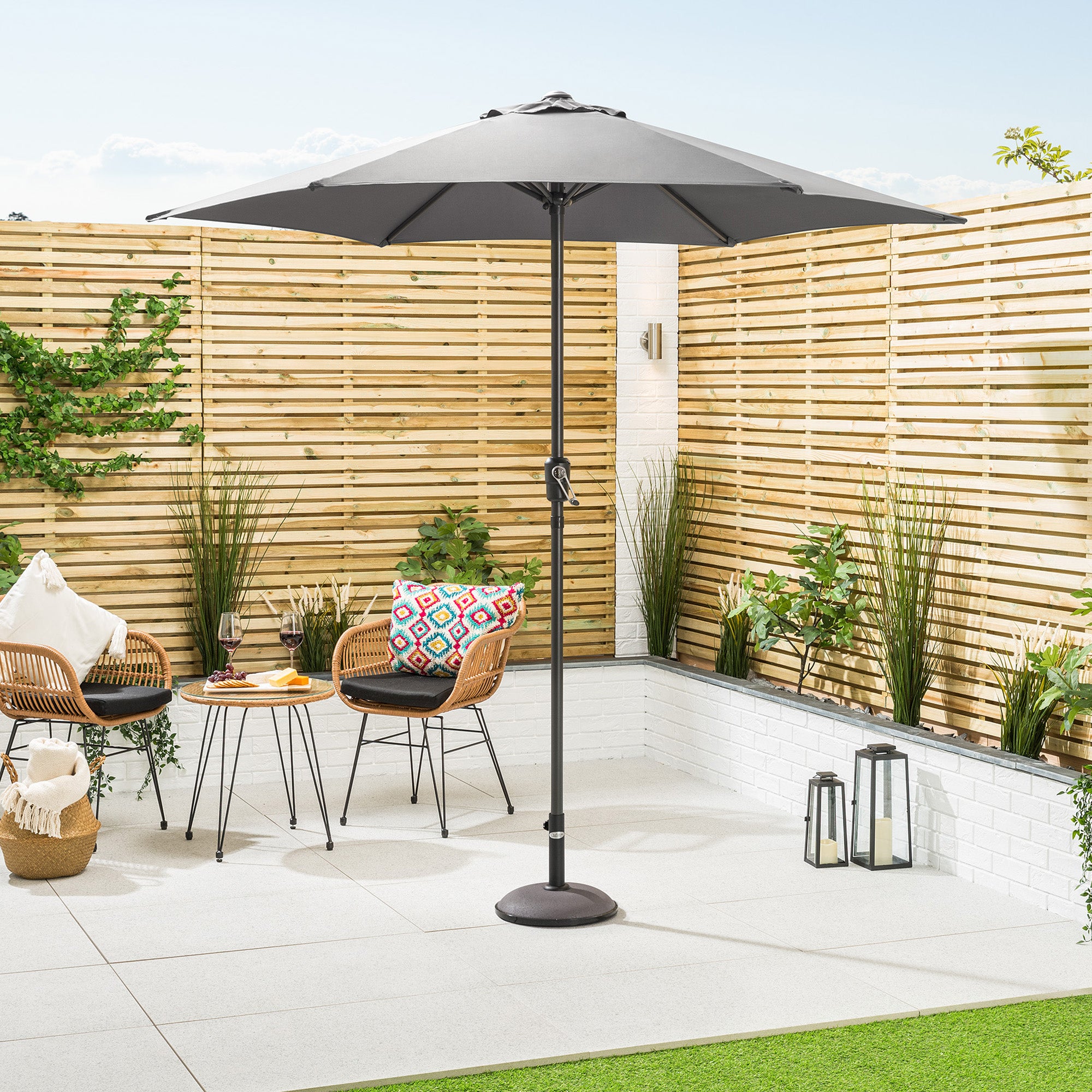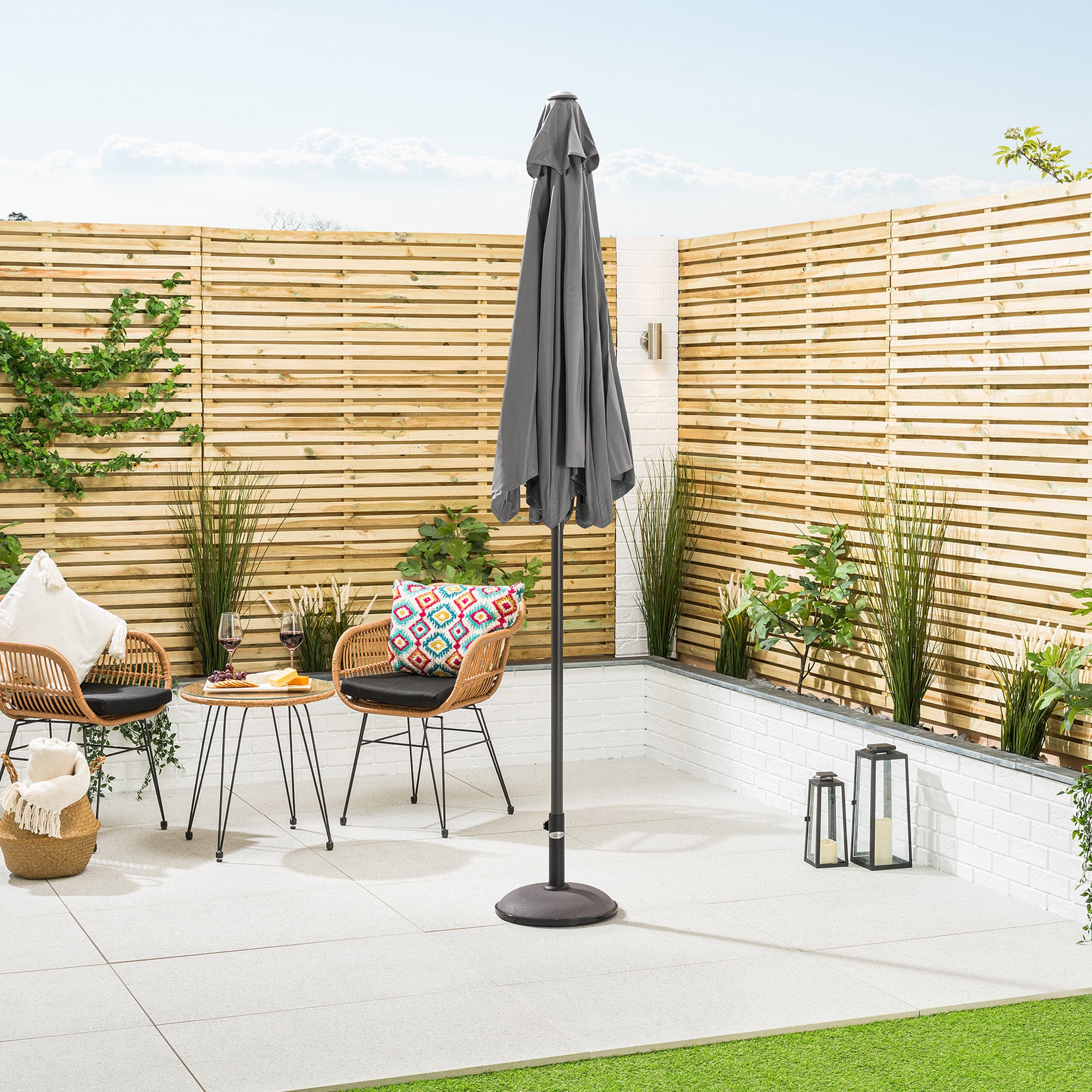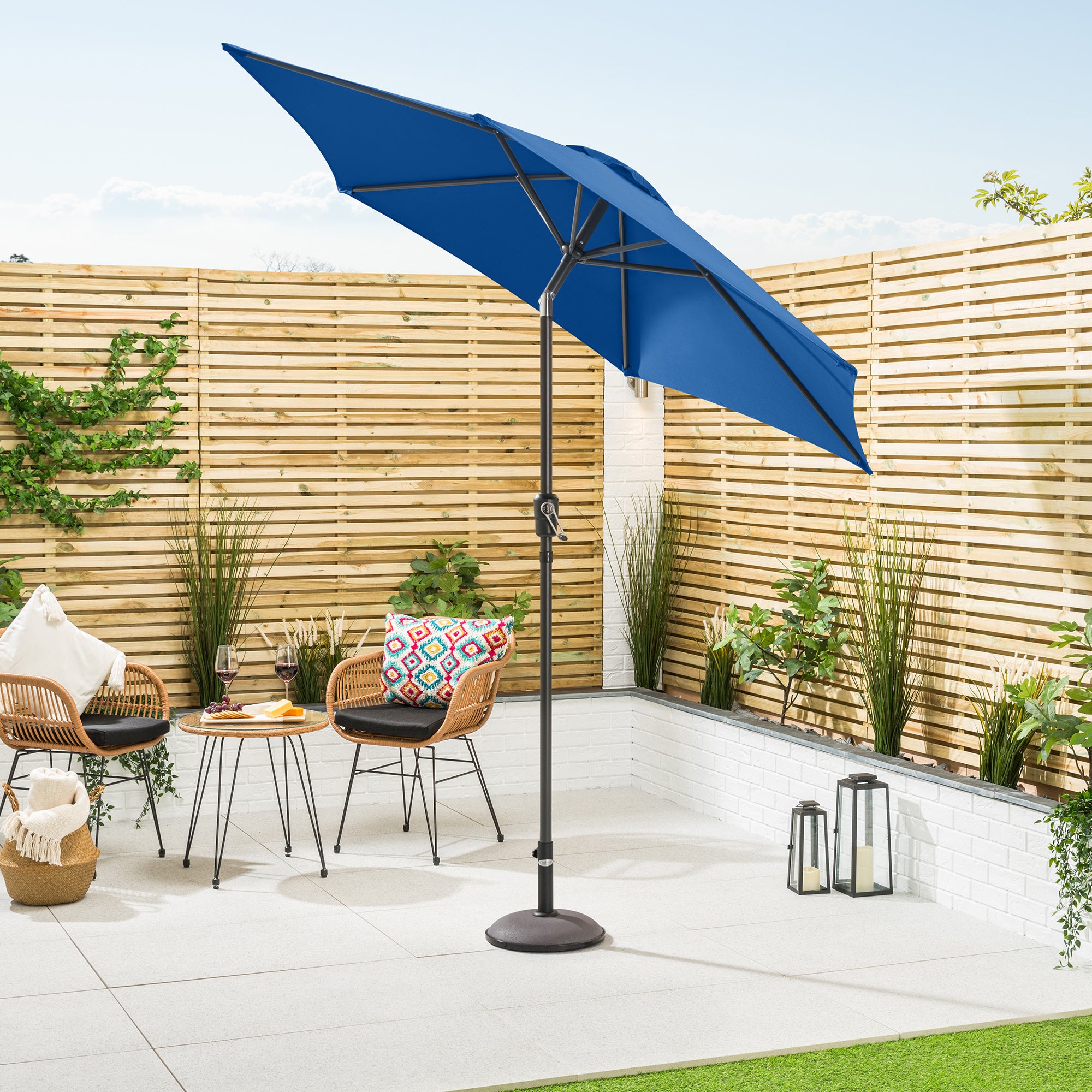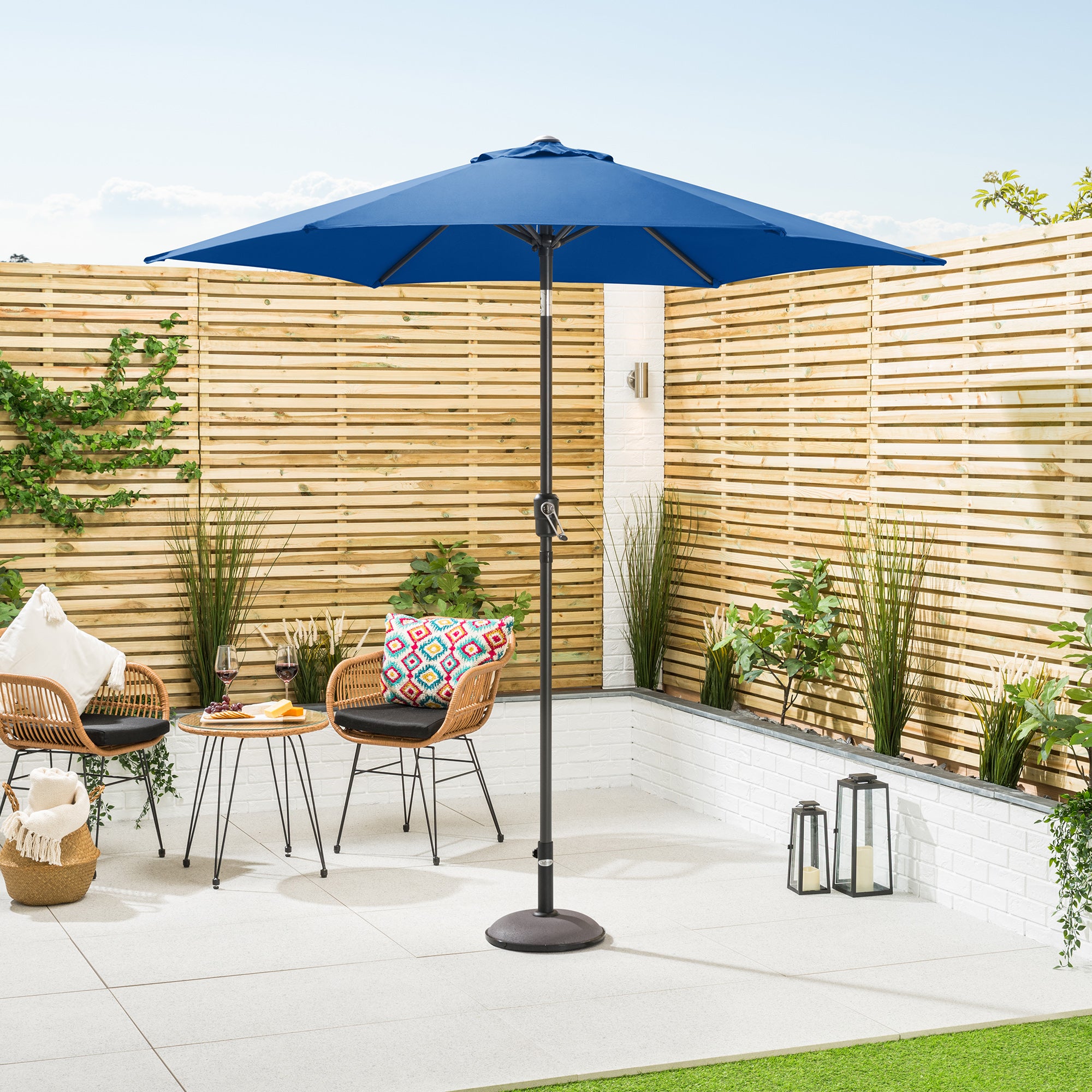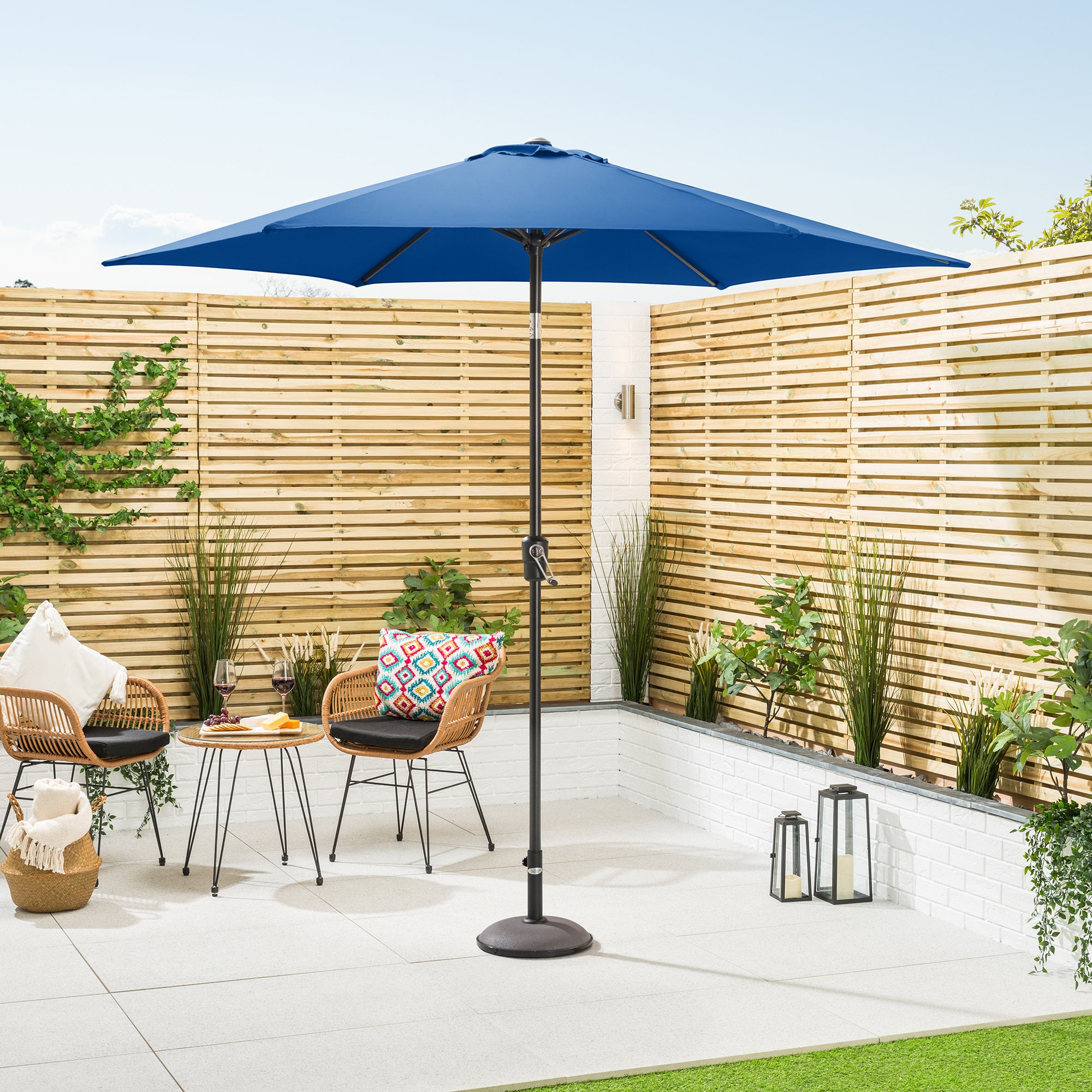



When summer arrives, there’s nothing better than relaxing in your garden. But while sunshine is welcome, it’s important to have a shaded spot to escape the heat. A garden parasol provides cooling shade, allowing you to enjoy your outdoor space in comfort while adding a stylish touch to your patio or decking.
With so many sizes, styles and features to choose from, finding the right parasol can feel overwhelming. In this parasol buying guide, we’ll explain everything you need to know – from canopy sizes and materials to different types and key features – so you can choose the best garden parasol for your outdoor space.
Canopy Size
Before choosing a parasol, consider the size of the canopy. Choosing the right size depends on how much shade you need, how you plan to use your parasol, and the size of your outdoor space.
Small Parasols (2m – 2.4m)
Small parasols with a 2m to 2.4m canopy are ideal for compact spaces. They’re great for shading a two or four-seater table and work well on patios, balconies, or decking areas where space is limited.
Medium Parasols (2.5m – 3m)
Medium-sized parasols with a canopy between 2.5m and 3m provide a generous amount of shade. They’re well suited to larger patio tables or for creating a shaded area when relaxing on a sun lounger.
Large Parasols (3m+)
Large parasols with a canopy of 3m or more are ideal for covering spacious outdoor areas. They work well for shading seating sets or dining areas and often have cantilever designs for greater flexibility.
Pole Material
Parasol poles and ribs are typically made from either steel or aluminium. Steel offers strength and stability, while aluminium is lighter and more resistant to corrosion, so it’s worth considering which best suits your needs.
Steel Pole
Parasols with steel poles and ribs are the strongest option we offer. Their heavier weight provides excellent stability and improved wind resistance, while a powder-coated finish helps protect against rust and wear.
Aluminium Pole
Aluminium parasols are lighter than steel, making them easy to move around your garden. They’re naturally resistant to rust, making them a great low-maintenance option for long-term outdoor use in all weather conditions.
Key Features to Look For in a Parasol
When choosing a parasol, it’s important to consider the features that improve durability, ease of use, and protection from the elements. Many of these features are included as standard across our range, unless stated otherwise.
Canopy Fabric
Parasol canopies are typically made from thick 180gsm polyester for strength and durability. The water-resistant fabric helps protect you from light summer showers, making it ideal for everyday outdoor use.
UV Protection
Most parasols have a UPF rating of 30+ to provide protection from the sun’s harmful rays. However, some parasols have enhanced UPF50+ protection, offering greater protection in strong sunlight.
Air Vent
A vent at the top of the canopy helps reduce wind pressure and improve stability in breezy conditions. It also allows air to circulate more freely, keeping you cooler in warm weather.
Crank Handle
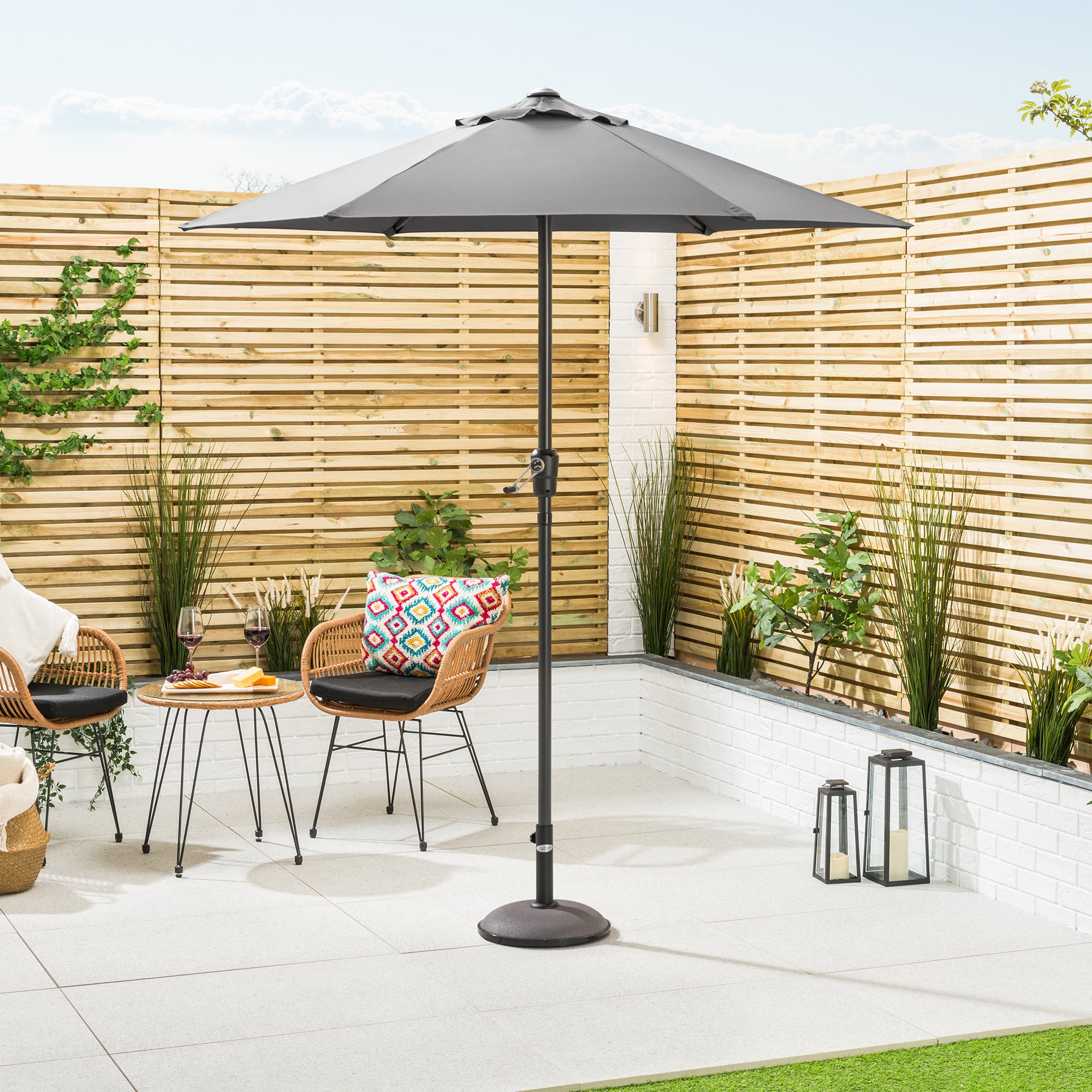
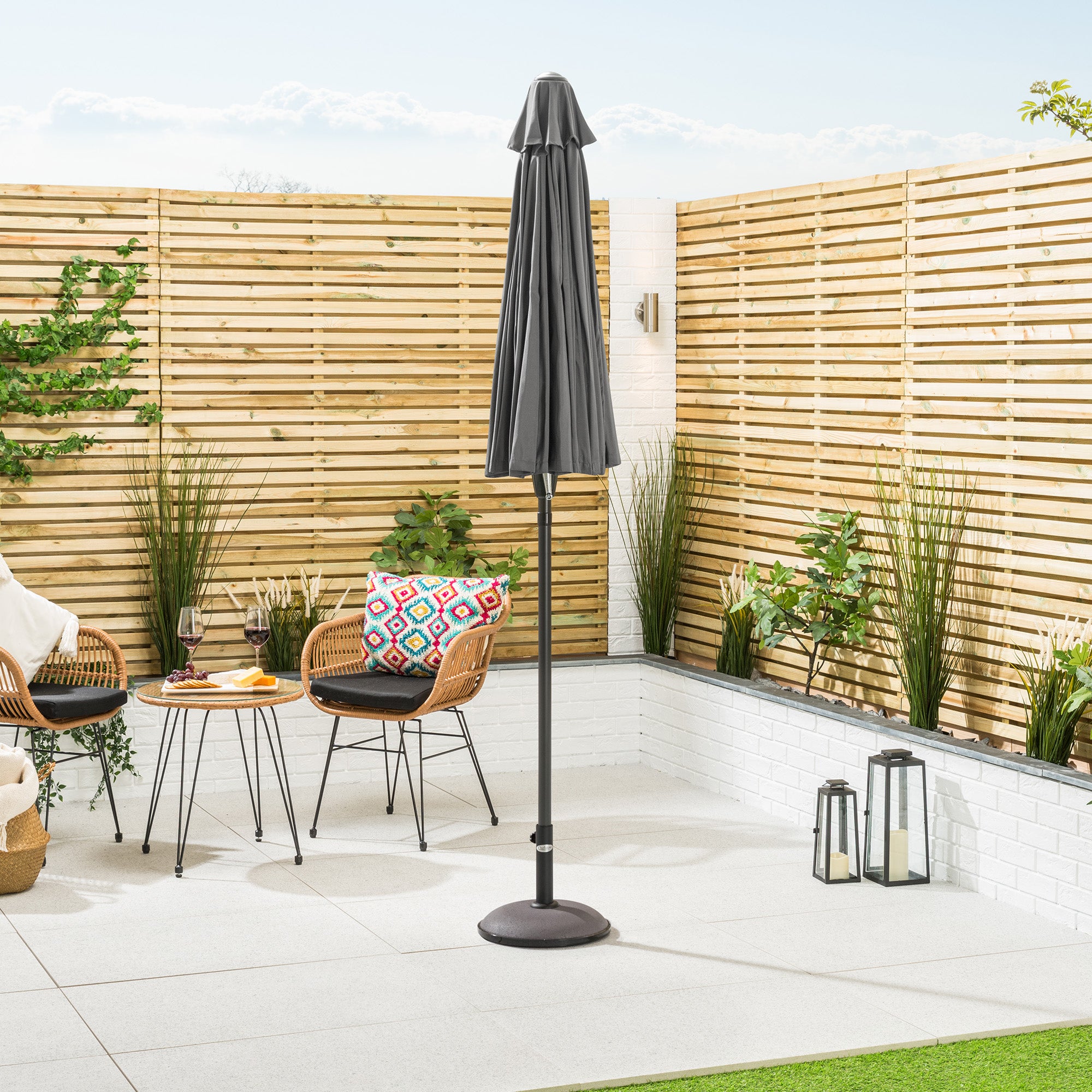
Most parasols feature a crank handle for easy opening and closing. Simply turn the handle to raise or lower the canopy with minimal effort, making it quick and convenient to use.
Tilt Function
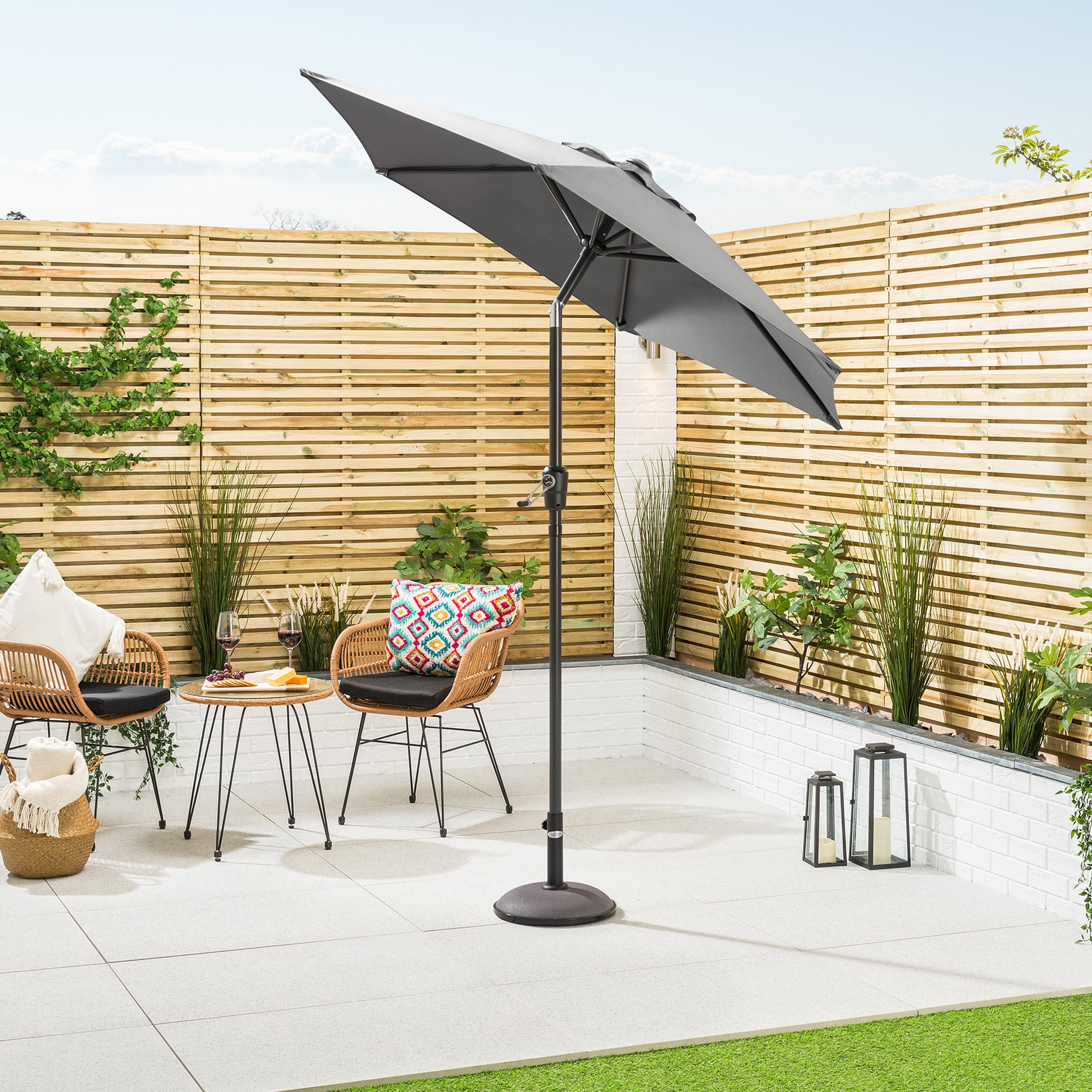
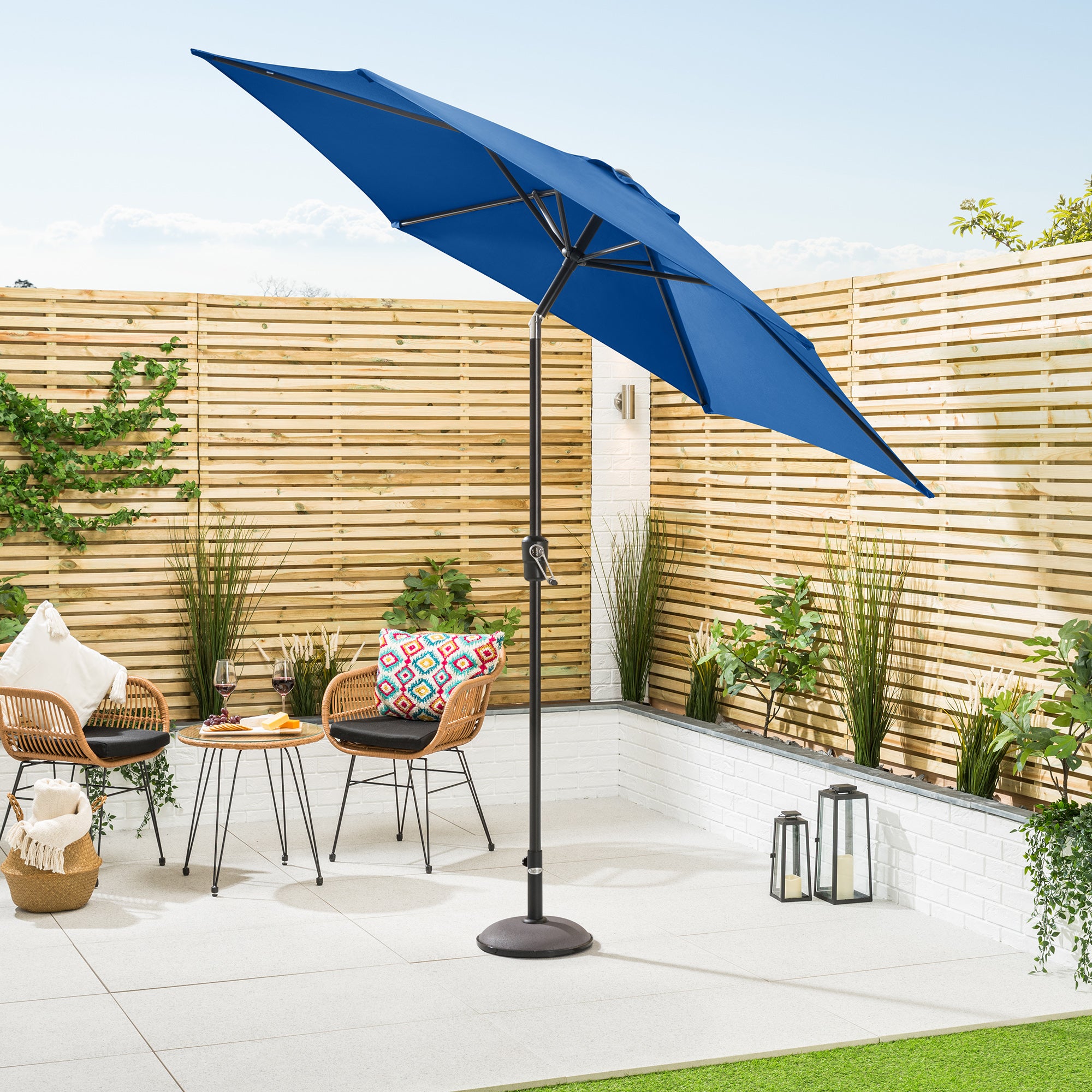
Some parasols include a tilt function, allowing you to angle the canopy to block the sun as it moves throughout the day. This provides more flexible shade without needing to reposition the parasol.
Types of Parasol

Now that you’re familiar with canopy sizes and key features, the next step is choosing the right type of parasol for your outdoor space. Each type is designed for different uses, from dining areas to flexible garden shade.
Table Parasols
Table parasols are the most common type, designed for use with a patio table. With a central pole that fits through a table hole, they provide reliable shade for outdoor dining and seating areas. With a heavier base, they can also be used without a table.
Cantilever Parasols

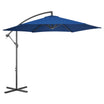
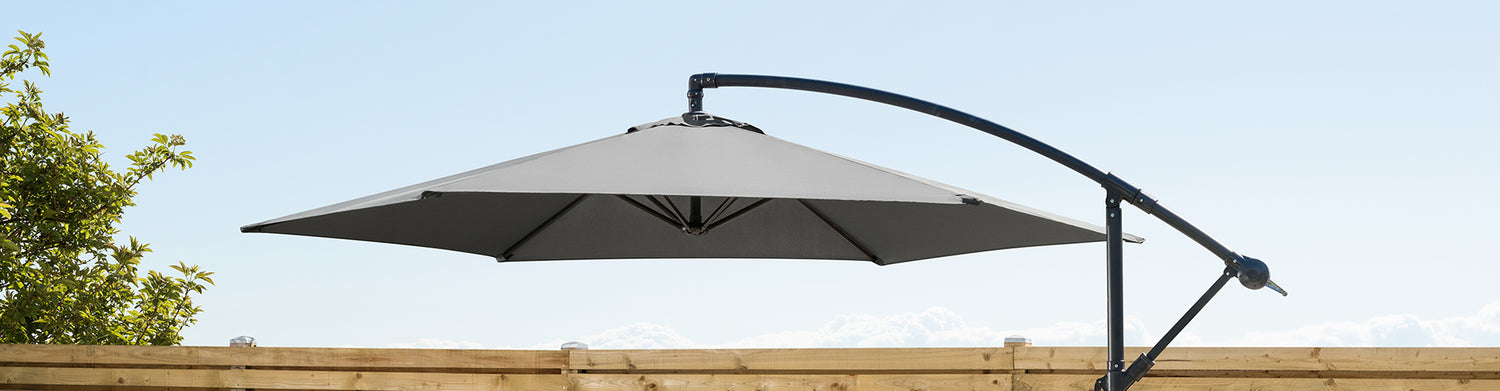
Cantilever parasols, also known as overhanging parasols, have an offset base with a suspended canopy. This allows you to shade a larger area without a central pole getting in the way, making them ideal for seating sets, sofas, and flexible outdoor layouts.
Half Parasols

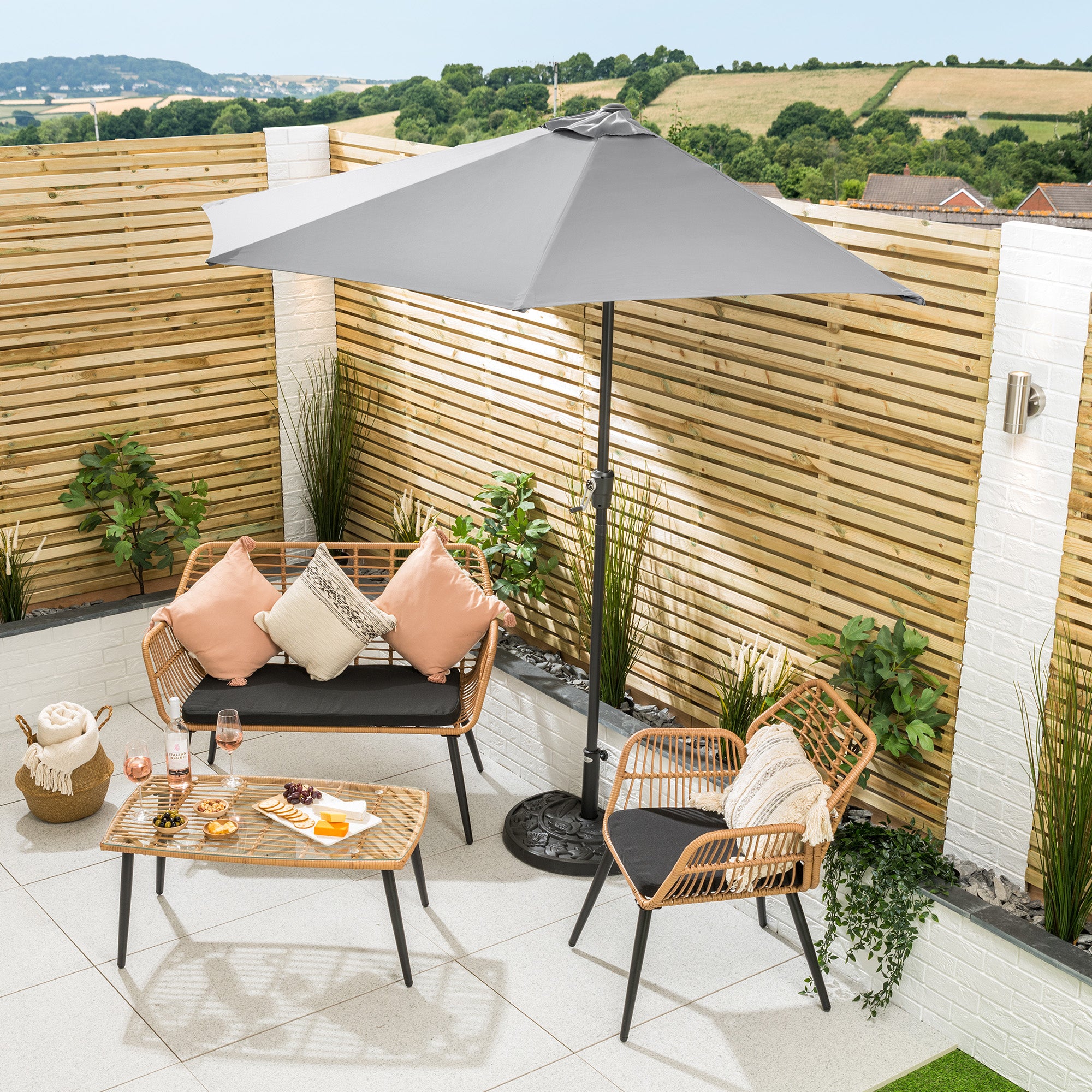
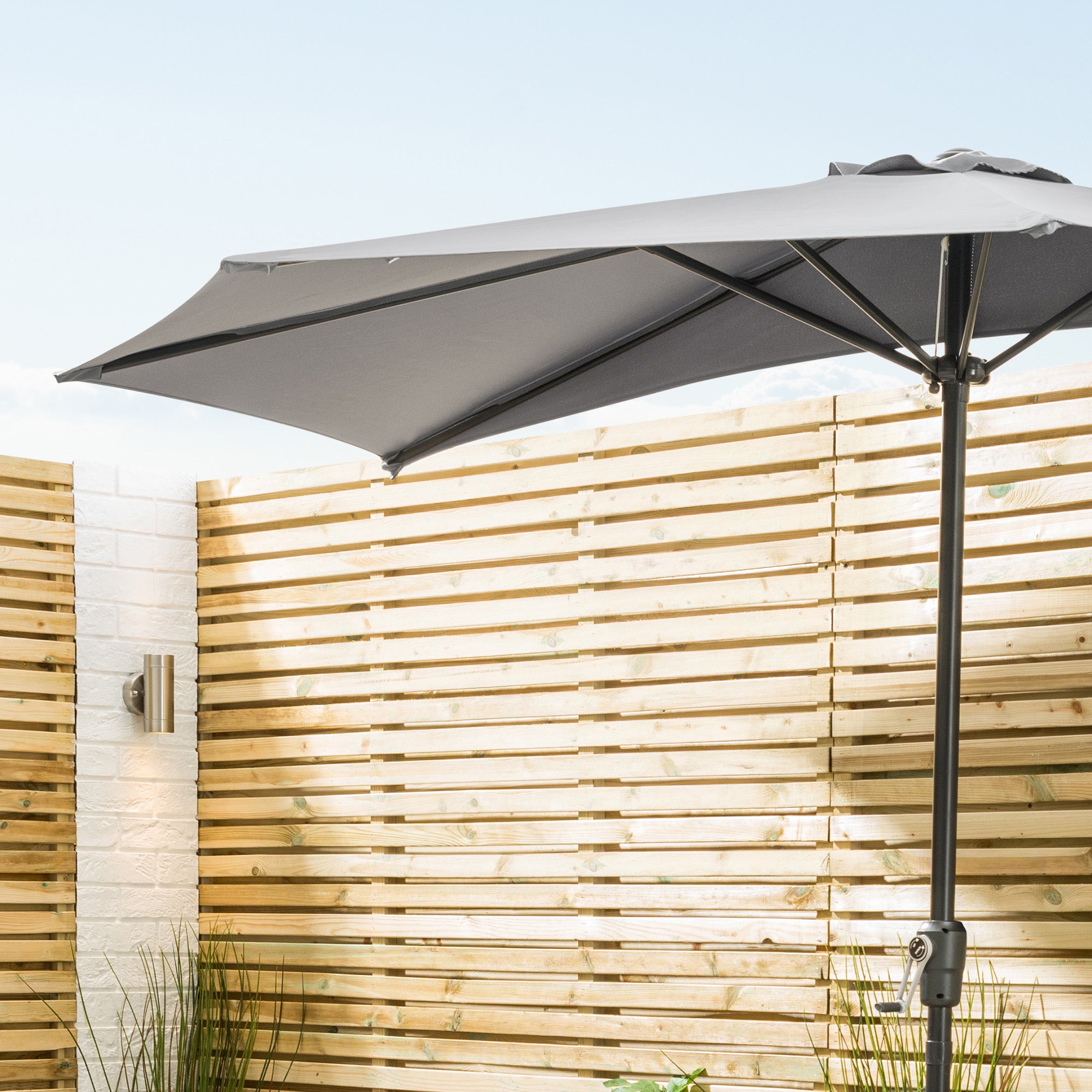
Half parasols are designed for smaller spaces such as patios and balconies. With a half-sized canopy that sits flat against a wall or fence, they provide effective shade while saving space. They’re ideal for compact areas where a full-sized parasol wouldn’t fit.
Portable Parasols
Portable parasols are a lightweight and compact option, packing neatly into a carry bag for use on the go. They’re perfect for beach trips, picnics, and temporary shade in the garden, providing a simple and convenient way to stay protected from the sun.
Parasol Styles
As well as choosing the right size and type, it’s worth considering the style of your parasol. From natural finishes to decorative canopies, different designs can help complement your outdoor space.

Wood-Effect Poles
Some parasols feature a realistic wood-effect finish on the pole and ribs, combining the look of natural wood with the strength of steel. For example, our wood-effect cantilever parasol is ideal for decking or pairing with wooden furniture.
Shanghai Canopies
Shanghai-style parasols have extra ribs to give the canopy a decorative, oriental-inspired look. With their stylish and modern design, they’re perfect for adding a distinctive and eye-catching focal point to patios, decking, or garden seating areas.
Tassel Canopies
Tassel parasols have decorative edging around the canopy, adding a stylish and relaxed look to your outdoor space. Our tassel parasol with tilt is a great choice for creating a beach-inspired feel or adding a touch of boho style.
Choosing the Right Parasol Base

Choosing the right parasol base is essential for keeping your parasol stable and secure. The type and weight you need will depend on the style of parasol you’re using and whether it’s placed through a table or used freestanding.
Bases for Table Parasols
If using a parasol through a patio table, a lighter base is usually sufficient to keep it stable. For freestanding use, a heavier base is recommended to provide extra support and greater stability in breezy conditions. Ideally, it should weigh 20kg or more to keep the parasol well weighted.
Bases for Cantilever Parasols
Cantilever parasols are supplied with a cross base, but this requires additional weight to keep it secure. Base weights are placed over the cross frame to provide stability and prevent the parasol from tipping. Choose 50–80kg weights for parasols under 3m and heavier weights for larger parasols.
Bases for Half Parasols
Half parasols require a specially designed base to sit flush against a wall or fence. A standard base won’t provide the correct fit, so a half-sized base with a flat back is needed to keep the parasol stable while maintaining its space-saving design. A weight of 15kg or more should provide sufficient stability.
Replacement Canopies
If your parasol canopy becomes damaged or you’d like to refresh its look, there’s no need to replace the entire parasol. A replacement canopy can be fitted to your existing frame, helping to extend its lifespan and update its appearance.
When choosing a replacement canopy, it’s important to make sure it’s compatible with your parasol frame. Most canopies are designed to fit specific sizes and shapes, so checking the following will help you find the right fit:
- Check the number of ribs on your parasol, as canopies are designed for specific frame structures.
- Make sure the canopy shape matches your parasol frame, such as square or hexagonal designs.
- Measure the diameter of your existing canopy to ensure you choose the correct replacement size.
Some replacement canopies are also compatible with parasols from other brands, provided the frame meets the required specifications.
Find Your Perfect Parasol
Whether you’re updating your current setup or choosing your first parasol, selecting the right size, style, and features will help you stay cool and comfortable all summer long. Explore our full range of parasols and bases to find the perfect option for your outdoor space, or take a look at our parasol comparison guide for a side-by-side breakdown.